




After being named dean last year, one of the most important things Andrea Tapia needed to do was establish a “good, reliable team” to help her lead IST into the future.
“Building a strong college leadership team is a lot like assembling a great party in Dungeons & Dragons (D&D): Success depends on bringing together people with diverse skill sets, perspectives, and strengths,” Tapia said. “Just as a D&D party needs a mix of fighters, wizards, rogues, and clerics to navigate complex quests, a leadership team thrives when it includes individuals who excel in academic vision, operational expertise, strategic thinking, student engagement, and community building.”
Tapia found the ideal combination of “party guests”—each bringing unique talents and experiences to the college—and together, they hit the ground running.
Just one day before Tapia’s “DEANiversary,” the leaders gathered to talk about their first year together, their hopes for the college, and the uniqueness of being an all-female team in tech.

Andrea Tapia
Dean
“No single D&D character—or college leader—can handle every challenge alone,” Tapia said. “It's the collaboration, the balance of talents, and the respect for each other's roles that turn a group of individuals into a powerful, adaptable, and resilient team ready to face whatever adventures lie ahead.”
In that spirit, Tapia made it a priority to put the right people in the right positions.
“As dean, building this team was the biggest and best thing I’ve done thus far.”

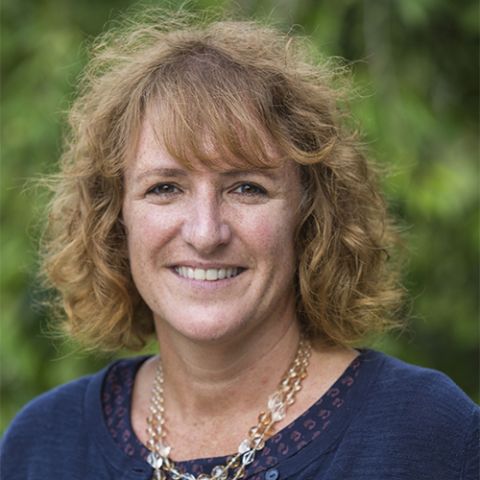
Carleen Maitland
Associate Dean for Research and Graduate Affairs
In recent months, research and higher education have come under fire at the federal level. Tapia is confident that Maitland will advocate for the college's research and researchers.
“I can say, ‘Hey, Carleen, this sensitive thing is really a mess. Please find out more and take care of it,’” Tapia said. “And I know she will.”
Maitland is putting leadership muscle behind IST’s research and working to share the impact of that work with the broader community.
“The current struggles facing higher ed will make us stronger and encourage us even further to show the importance of our research,” Maitland said.
And that means also supporting doctoral students and their supervising faculty in the process.
“Helping graduate students feel like they are truly part of the IST research culture involves all of us,” she said.

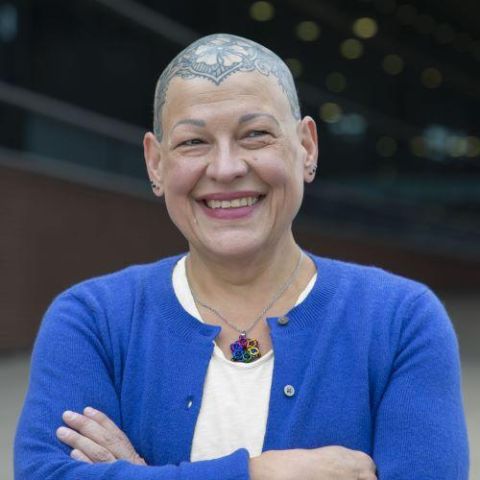
Lisa Lenze
Associate Dean for Undergraduate Studies
IST has more students and majors than ever, and Tapia is eager to see what Lenze will do next.
“As we strive to grow enrollment and program offerings, Lisa is always ready to challenge the status quo, asking, ‘Why do we do it that way? Let’s try something else,’” Tapia said.
Lenze is thrilled to work in her new position. She had observed a culture of possibilities when Tapia was interim dean (before being named permanent dean) and knew she wanted to lead undergraduate programs in this new environment.
“Our faculty, learning designers, and student support staff are experimenting and collaborating on new academic and experiential learning programs,” Lenze said. “My aim is to knit these experiences together such that undergraduate students find their passion and achieve their goals.”

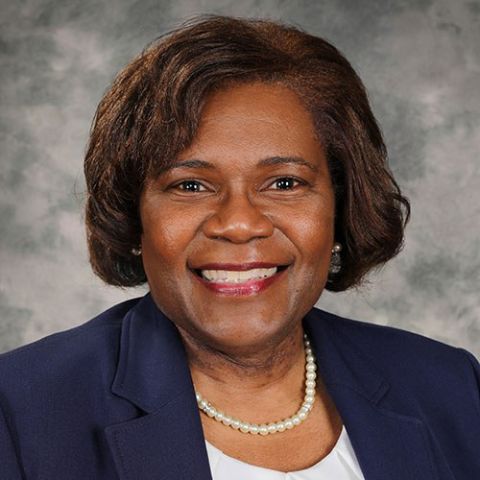
Jocelyn Bennett Garraway
Associate Dean for Student Success
Setting students up for success goes far beyond academic support. It involves making essential resources available—from the moment they discover IST until they receive their diploma.
“Jocelyn is meeting students where they are and how they are, helping to remove whatever obstacles may be standing in the way of a successful college experience,” Tapia said. “She ensures we’re doing everything we can to welcome and support them.”
As the director of the Chaiken Center for Student Success and the Office of Enrollment, Engagement, and Belonging, Bennett Garraway advocates for an equitable and inclusive culture that allows students from all backgrounds to feel valued and empowered.
“Lots of different kinds of students want to come to IST, and we are ready to support them,” Bennett Garraway said. “Our aim is to empower every student to be their authentic self.”

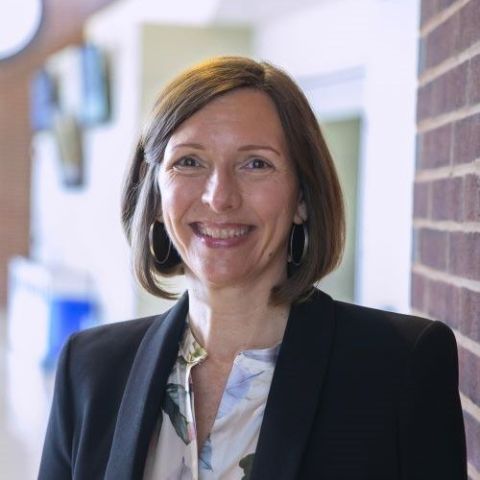
Cindy Brewer
Associate Dean for Faculty Affairs
Creating three new departments is a big accomplishment for the college, one that faced many obstacles over a long period of time.
“Cindy showed up as an applicant the same year we were actually building the departments,” Tapia said. “She knew departments, she knew the Faculty Senate, and she spoke Penn State as a language. I couldn’t have wished for a better person at a better time.”
As the associate dean for faculty affairs, Brewer is looking at how to make an impact internally. “I want the faculty to succeed,” Brewer said. “I want them to feel welcome, to know what to do next, assist them through promotion and tenure preparations, and help them get to know each other and then understand the larger institution of IST.”

Amy Stever
Assistant Dean for Academic Services (retired)
At the heart of the leadership team is someone who has their finger on the pulse of the college.
“Amy is always listening in an effort to understand how students, parents, and staff are experiencing the changes we make,” Tapia said. “She ensures everyone is heard. And she makes sure I know it, too.”
Stever, who retired in June, was excited about those changes and believes this is the time for taking risks. Effective leadership will help.
“Andrea has pushed back the ‘no’ button and that makes us more agile as an organization,” Stever said. “Now, when we present new ideas, we hear, ‘Why not?’
“And we coalesce and pull together with expectations, deadlines, and structure so we’re able to make things happen.”
Paving the Way
Technology is a field for innovation, but the industry hasn’t historically led the way when it comes to gender diversity. Only 25% of the tech workforce are women, and the disparity is even greater in tech leadership, with just 11% of executive roles held by women.
IST is a remarkable (albeit unintentional) exception. In building its current leadership team, the college sought individuals with unique experience, skills, and vision to contribute to its foundational interdisciplinary mission. Now, IST is being led by deans who hold degrees in sociology, engineering, speech communication, psychology, geography, and history. And they all just happen to be women.
Though each now holds a prominent position in the college, some of the leaders remember a time when it was more difficult for women to advance in their careers. Tapia experienced sexism as a woman in academia and, later, in tech.
“As I looked back on the negative interactions I’ve had over the years, I promised that I would never be that person. I will never let the environment that created those moments happen on my watch,” she said. “It’s those negative experiences that inspire us to be the way we are now—motivated to change what we do and how we talk to others.”
As a leader who is a woman and African American, Bennett Garraway feels a sense of responsibility to pave the way for other women.
“I can’t ignore the intersectionality of the work,” she said. “Even though we can say we have advanced, and people are more accepting, a team like ours is still rare. We have to keep moving forward so this doesn’t continue to be unusual.
“We have to say: This is what STEM is. It’s everyone.”
Only 25% of the tech workforce are women, and the disparity is even greater in tech leadership, with just 11% of executive roles held by women.
Forbes, 2024
Mentioned in this story
Jocelyn Bennett Garraway
- Associate Dean for Student Success
- Director, Chaiken Student Success Center

Carleen Maitland
- Professor and Associate Dean for Research and Graduate Affairs
- Co-Director, Institute for Information Policy
Also in This Issue

"There's No Place Like Home"
C. Frank Igwé ’08g, founder of Moravia Health, was presented the Dean's Alumni Excellence Award.

Alumni Awards
The college recognized three outstanding alumni with awards for their professional work and accomplishments.
Make a Gift
When you support the College of Information Sciences and Technology, you make an impact greater than a simple transaction. No matter the size of your gift or what you support, your gifts drive us forward, making the college—and the world—a better place.