

About CSRAI
Penn State’s Center for Socially Responsible Artificial Intelligence aims to enhance interdisciplinary education, research, and outreach in artificial intelligence; its applications; and its impact on work, society, and all aspects of our daily lives. Launched in April 2020 and housed administratively in the College of Information Sciences and Technology, the Center aims to promote, practice and study socially responsible ways of building, deploying and using AI technology, with an emphasis on understanding the social and ethical implications of these activities. The Center also supports and encourages activities that enhance social good through the ethical use of AI and efforts that can mitigate threats from its misuse.
By engaging diverse groups of scholars from the earliest design
stages through the deployment of new AI-based technologies, CSRAI
embraces a holistic approach that encourages that all AI research and
development activities to consider social and ethical implications as
well as intended and possible unintended consequences. Only when we can
bring together scholars from diverse areas—policy experts, engineers,
ethicists, philosophers, and sociologists—can we understand how to best
develop and deploy new AI-based technologies from day one.
Mission
The Center for Socially Responsible Artificial Intelligence at Penn State advances multi-disciplinary research in AI across and beyond Penn State; enables robust, socially responsible AI by involving all stakeholders including experts in science, technology, humanities, business, policy, and law; and trains students to acquire a broad multi-disciplinary knowledge of AI.
Vision
The Center for Socially Responsible Artificial Intelligence at Penn State will transform artificial intelligence research and education; improve society, government, and all aspects of human life through artificial intelligence; and serve as a clearinghouse for AI at Penn State and the national and international level.
Leadership

Shyam Sundar
- CSRAI Director
- James P. Jimirro Professor of Media Effects
- Donald P. Bellisario College of Communications
S. Shyam Sundar is James P. Jimirro Professor of Media Effects and founder of the Media Effects Research Laboratory in the Donald P. Bellisario College of. . .

Amulya Yadav
- CSRAI Associate Director (Programs)
- Associate Professor
- College of Information Sciences and Technology
Amulya Yadav is an Assistant Professor in the College of Information Sciences and Technology at Penn State University. He also has an affiliate faculty. . .
Speaker Program Coordinators

Sree Bhattacharyya
- Informatics Ph.D. Student
- College of Information Sciences and Technology
Multimodal deep learning, specifically focusing on enhancing models' subjective reasoning capabilities; creating accessible AI systems, alleviating biases. . .

Aditya Majumdar
AI for Social Good, AI for healthcare, Code-mixing capabilities of LLMs

Shraddha Pathak
- Informatics Ph.D. Student
- College of Information Sciences and Technology
Economics and computation, computational social choice
Steering Committee

Rick Brazier
- Dean, University College
- Vice President for Commonwealth Campuses
Rick Brazier is senior associate dean for faculty and research for the 14 campuses that comprise the University College. He oversees all aspects of faculty. . .

Max Crowley
- Professor
- College of Health and Human Development
Max Crowley is a prevention scientist investigating how to optimize investments in healthy development and wellbeing. This work sits at the intersection of. . .

Andrea Matwyshyn
- Professor of Law and Engineering Policy
- Penn State Law
Andrea Matwyshyn is founding director of the Penn State PILOT Lab (Policy Innovation Lab of Tomorrow), an interdisciplinary technology policy lab, and a. . .

Wesley Reinhart
- Assistant Professor
- College of Earth and Mineral Sciences
Wesley Reinhart received his B.S. in Chemical Engineering from the University of Minnesota Twin Cities. He attended Princeton University on a National Defense. . .

Aleksandra (Seša) Slavković
- Dorothy Foehr Huck and J. Lloyd Huck Chair in Data Privacy and Confidentiality; Professor of Statistics and Public Health; Associate Dean for Research
- Eberly College of Science
Her research interests include methodological developments in the area of data privacy and confidentiality in the context of small and large scale surveys,. . .

Ted Toadvine
- Professor
- College of the Liberal Arts
Toadvine’s research over the last two decades has focused on the themes of aesthetics, animality, embodiment, environment, intersubjectivity, nature, ontology,. . .
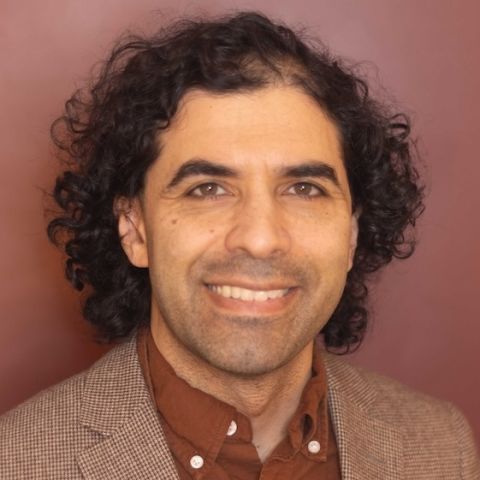
Shomir Wilson
- Associate Professor
- College of Information Sciences and Technology
Shomir Wilson's research interests span natural language processing, artificial intelligence, digital privacy, and computational social science. He is. . .
Contributing Units
Penn State’s Office of the Executive Vice President and Provost and contributing units committed initial funding to establish the Center and advance its agenda. Contributing units are represented on the Executive Committee and engage their unit in the Center’s work.
-
College of Arts and Architecture
B Stephen Carpenter II, Michael J. and Aimee Rusinko Kakos Dean
-
Donald P. Bellisario College of Communications
Emily Metzgar, dean
-
College of Earth and Mineral Sciences
John Mauro, Interim John Leone Dean
-
Thomas F. La Porta, Interim Harold and Inge Marcus Dean of Engineering
-
College of Health and Human Development
Craig J. Newschaffer, Raymond E. and Erin Stuart Schultz Dean
-
College of Information Sciences and Technology
Andrea Tapia, dean
-
Clarence Lang, Susan Welch Dean
-
Karen Kim, dean
-
Tracy Langkilde, Verne M. Willaman Dean
-
Institute for Computational and Data Sciences
Guido Cervone, director
-
Penn State Commonwealth Campuses
Renata Engel, vice president for Commonwealth Campuses and executive chancellor
-
Sarah J. Williams, interim dean
-
Larry D. Terry II, vice president
-
Ted Toadvine, Nancy Tuana Director
-
Social Science Research Institute
Deborah Ehrenthal, director

Support the Center
At the heart of the Center for Socially Responsible Artificial Intelligence are the interdisciplinary collaborations that drive technological breakthroughs, innovative solutions, and thoughtful implementation.
The Center’s vision focuses on opening new pathways for discovery and breaking down the boundaries of traditional disciplinary research. Support from industry, government, and foundational partners is critical to achieving the goal of ensuring that the entire life cycle of AI development considers the far-reaching implications of its deployment.
If you are interested in supporting the Center, please contact us!
Email Us